
React Vs Angular: What should a Beginner Learn?
React Vs Angular: What should a Beginner Learn? Author: Muhammed BilalI kept seeing this question repeatedly when I started to…
Written by Devi A | Flutter Developer
In the case of having a single code base, Cross-Platform Mobile Development enables the developers to make apps for several operating systems. There is no need for the developers to make apps individually for both Android and iOS because they can easily make apps using certain frameworks such as Flutter and React Native. You will learn about cross platform development in this blog post and its advantages as well as disadvantages.
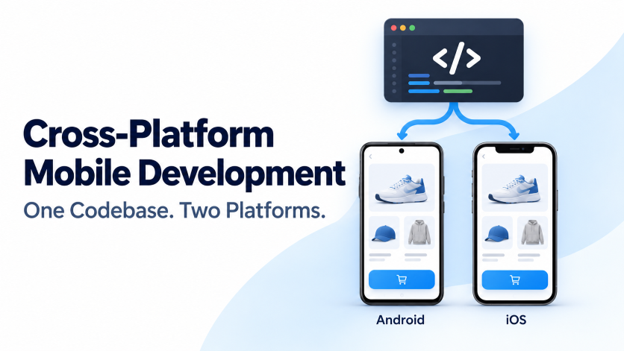
Earlier Android and iOS apps used to be developed individually by following different techniques and technologies. Android apps were usually written in Kotlin or Java programming language whereas iOS app development was done in Swift/Objective C programming languages.
Cross-platform mobile development is completely different than that of above mentioned traditional app development method.
Suppose that a small company is trying to introduce a food delivery application both on Android and iOS. Using the traditional method of development, there will be a necessity to have separate development for both platforms. If cross-platform technology is used, the same code will be utilized in developing two applications.
Cross-platform platforms offer means that help to build user interfaces, manage logic of the application, link APIs, and deal with other typical needs of applications in a single project.
For instance, Flutter makes use of Dart and offers its own UI system based on widgets. React Native makes use of either JavaScript or TypeScript and allows building interfaces of mobile apps based on React.
Usually, the order of action looks like this:
Planning → Designing → Developing → Testing → Building → Publishing
A shared project can handle features such as user login, API communication, input checking, screen navigation, and data handling.
Flutter is developed by Google, and it employs Dart as the programming language. The major reason why most developers like using Flutter is because of its ability to allow them to create the UI through widgets and receive instant feedback about their changes in the UI.
Flutter can prove to be quite useful especially when it comes to UI consistency across various platforms.
React Native, created by Meta, gives the ability to the developers who are experienced in JavaScript and React to develop mobile applications. This is a good choice for companies already working with React.
Interested in Learning Mobile App Development? Explore practical training in Flutter, app development, and industry-relevant programming skills.
It is not mandatory for developers to build features twice. Code reuse would be able to decrease development time and make applications come out faster.
React Native, created by Meta, gives the ability to the developers who are experienced in JavaScript and React to develop mobile applications. This is a good choice for companies already working with React.
When some business logic should be changed, developers may do it only once in the common code rather than changing it separately in two projects.
A shared development approach can make it easier to maintain similar designs, features, and application behavior across platforms.
Cross-platform development is not necessarily the optimal approach to developing all applications.
Some applications might have requirements related to the platform, or even hardware, for which native development may be required.
Also, performance can vary depending on the framework, application architecture, plugins used, and even the way the application was developed.
An additional issue that needs to be considered is that of testing. An application that runs perfectly fine on one particular Android device may behave quite differently on other devices or versions of iOS.
| Feature | Cross-Platform | Native |
|---|---|---|
| Code sharing | High | Low |
| Development effort | Usually lower | Usually higher |
| Platform-specific control | Moderate to high | Very high |
| Maintenance | Easier for shared features | Separate maintenance |
| Best suited for | Many business apps | Highly platform-specific apps |
The correct answer to choose depends on application needs and not only on newness of technology.
Imagine that the team is developing a shopping application that contains the product catalog, login, payment functionality, notifications, and the admin API. The developers need to develop applications for Android and iOS and have limited resources to do that. A cross-platform framework will help them to develop common functionality for two platforms effectively.
Later, in case the specific functionality requires native code, developers will add platform-specific implementation.
This is just one reason why cross-platform mobile development became very popular among enterprises.
For a beginner who wants to start his career as a mobile developer, learning a cross-platform framework is quite a reasonable step.
But merely knowing about this method is not enough. A programmer should be well versed with basic programming concepts, APIs, Git, state management, user interface, debugging, testing, and application structure.
For example, a Flutter developer should not just focus on widgets alone. The knowledge of Dart programming, REST APIs, state management, Git, debugging, and good application architecture may make a big difference in real-life projects.
Mobile app cross-platform development has brought about major changes in the way many developers work in order to create mobile applications. Possibility of using code that can run in both Android and iOS platforms has made things easier and more convenient.
There are many different ways like Flutter and React Native which can address the problem. But it really depends on what the requirements and preferences of the developer are.
The cross-platform development of an application can be helpful for a beginner developer; however, it should
Explore Edure’s Cross-Platform Mobile Development Course or internship opportunities and discover ways to apply your development knowledge.

Latest Articles
Insights, tutorials, and updates from our team — delivered fresh.
React Vs Angular: What should a Beginner Learn? Author: Muhammed BilalI kept seeing this question repeatedly when I started to…

Organic Marketing: What It Is and How to Get Leads Without Paying for Ads Author : Albin V CEvery business…
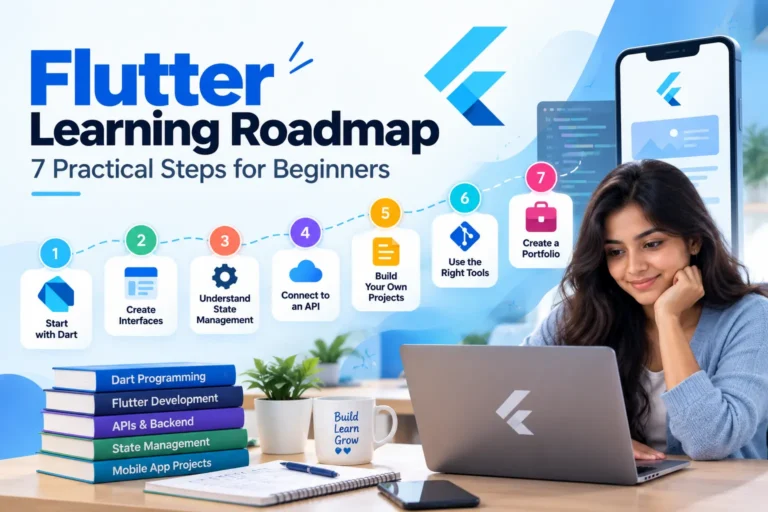
Learning Flutter: A Roadmap That Actually Makes Sense Author : Devi A Where Do You Start? One of the perplexing…

Where to Learn Digital Marketing? What Beginners Should Know Author: Albin V CPromoting a service, a product, or even your…
Life as a Flutter Developer: Not Every Day Goes as Planned Author: Devi A Easy Task But Then I Realized…
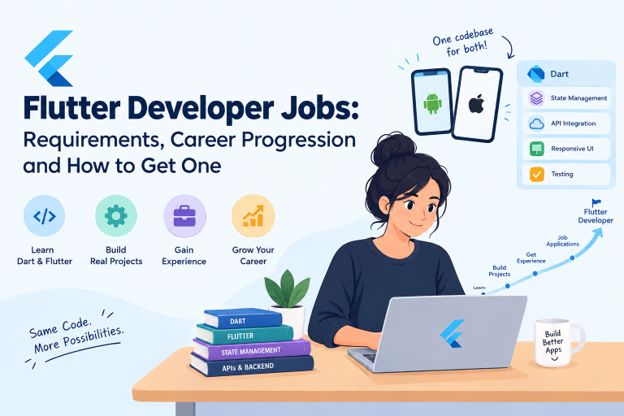
Flutter Developer Jobs: Requirements, Career Progression and How to Get One Author: Devi A | Flutter Developer Introduction It is…
This Post Has One Comment
Great insights, Devi
As someone looking to break into mobile development, this breakdown of cross-platform frameworks is super helpful. The comparison between Flutter and React Native makes it much clearer why code sharing is such a game-changer for startups and individual developers alike.
Your point about going beyond just learning UI widgets and focusing on state management, APIs, and proper architecture really resonated with me. Thanks for sharing such a practical, beginner-friendly guide!
Comments are closed.