
Organic Marketing: What It Is and How to Get Leads Without Paying for Ads
Author : Albin V C
Every business wants the same thing: more people who find them, trust them and buy from them.
Some businesses pay for ads to get there. Others build slowly, with useful content, a good website and a steady social media presence. The second way is organic marketing.
It is slower, and it asks for patience. But when it works, it keeps working for you, even on the days you are not posting. In this guide, I will explain how organic marketing works, where beginners go wrong, and how you can start. If you are also wondering how to build a career in this field, read our guide on where to learn digital marketing.
What Is Organic Marketing?
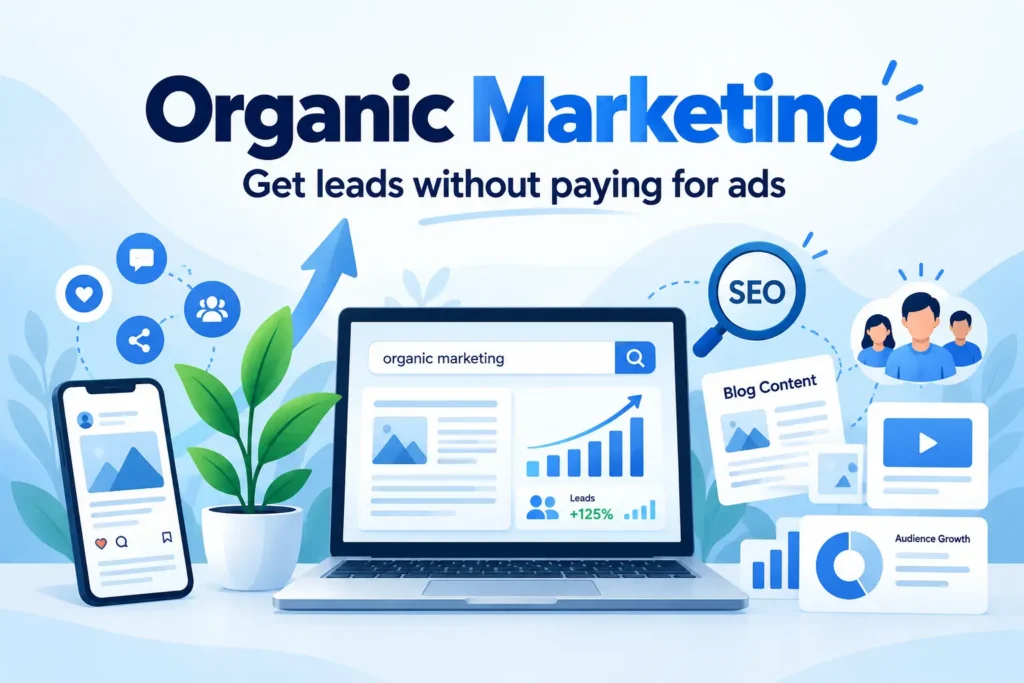
Organic marketing gets you clicks, leads, sales and visibility without paying for ads.
It needs time, and you must build trust. But once you earn trust and visibility, the leads and sales keep coming without ad spend. Organic leads are also often higher in quality than paid leads, because these people chose to find you.
The Two Main Ways to Do Organic Marketing
- SEO brings website traffic and organic visibility. People search on Google, and your page shows up with the answer.
- Social media: you post videos and photos, and gain visibility and leads over time.
Other organic channels work in the same spirit, such as YouTube, blogs, email newsletters and your Google Business Profile.
Organic vs Paid Marketing: What Is the Difference?
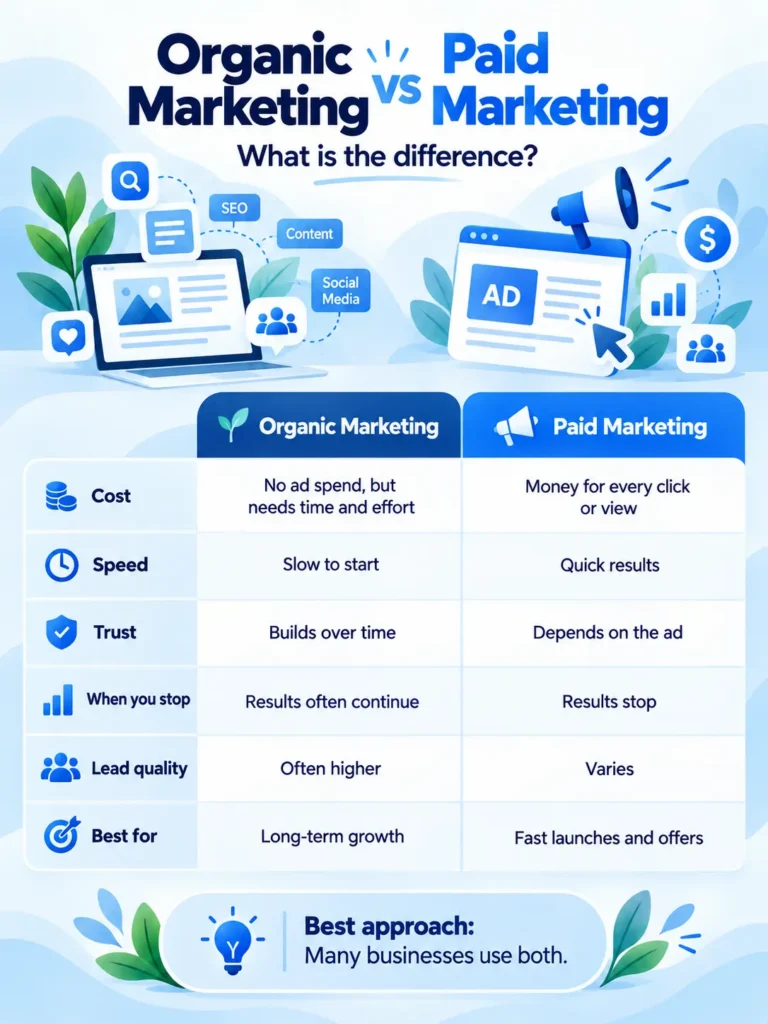
Think of paid marketing as renting a shop board. You pay, people see it. When you stop paying, the board is gone. Organic marketing is like building your own shop. It takes longer, but it stays yours.
Cost: Organic marketing requires time and effort but no advertising budget. Paid marketing requires money for clicks, views, or impressions.
Speed: Paid marketing can bring quick results, while organic marketing takes time to build visibility.
Trust: Organic marketing builds trust through useful content and regular engagement. Paid marketing depends on the advertisement and brand credibility.
Long-term Results: Organic content can continue attracting visitors over time, while paid traffic usually stops when the advertising budget ends.
Lead Quality: Organic marketing can attract people actively searching for solutions. Paid marketing can also generate quality leads with the right targeting.
Best For: Organic marketing supports long-term growth, while paid marketing works well for quick promotions, launches, and offers.
Neither is better in every situation. A smart marketer knows when to use both. That is why a good digital marketing course teaches organic and paid marketing together.
Why Organic Marketing Is Worth Your Time
It Builds Trust, Not Just Traffic
When someone reads your article or watches your video for a few minutes, they learn how you think. By the time they contact you, they already know you. That kind of lead is easier to talk to and easier to convert.
It Keeps Working
An ad stops the moment your budget ends. A good article or a well-optimised page can keep bringing visitors month after month.
It Gives You a Strong Base
Organic work also makes paid ads work better. A clear website and good content help every ad you run later.
How SEO Fits Into Organic Marketing
SEO means making your website easy for Google and for people to find and understand.
Here is a simple way to think about it. People type their problems into Google. If your page answers that problem clearly, you get a chance to appear. Nobody can promise a ranking, but helpful content gives you a real chance.
What SEO Includes
On-Page SEO
This is what you do on the page itself: clear titles, meta descriptions, headings, simple writing and good internal links.
Off-Page SEO
This is the trust you build outside your website, such as mentions and links from other good sites.
Technical SEO
This keeps your site fast, mobile-friendly and easy for Google to crawl.
A Mistake I Made Early in My SEO Career
When I started, I chased the Rank Math 100/100 green score on every page. I thought a perfect score meant a perfect page.
I was wrong. Later I learned that content and meta tags built around what people actually search for matter much more. A green score cannot replace helpful content. If you are a beginner, remember this: write for people first, and then check the tools.
How Social Media Fits Into Organic Marketing
On social media, you post videos and photos regularly. Over time, people begin to know you, trust you and message you.
What Works on Social Media
- Be useful. Share tips, answers and simple how-to videos.
- Show the people behind the brand. Faces and real voices build trust faster than logos.
- Reply to comments and messages. Every reply tells people you are real.
- Stay regular. A routine you can keep is better than a big plan you quit.
A Simple Example: Imagine a home baker in Kochi who posts a short baking video three times a week and answers every message. For the first month, only friends watch. Then a few strangers start asking about prices. Later, customers start sending her videos to their friends.
She did not go viral overnight. She became familiar. And people buy from people they know.
Why Organic Marketing Matters Even More in the Age of AI
Search is changing. AI tools and AI answers now give people direct responses, and I have seen fewer blue-link clicks and lower site traffic on some websites because of it.
This does not mean organic marketing is dead. It means the bar is higher. Thin, copied content gets ignored. Content that is clear, honest and written by someone who knows the topic has a better chance of being used and trusted.
AI can also help you work faster. You can use it to automate repetitive tasks and to analyse data more accurately. But you still need human judgement to decide what to say and why. That is why digital marketers need both skills and real experience.
The Honest Truth: Organic Marketing Takes Time
Organic marketing is not a shortcut. It will not give you sales in a week.
Many beginners quit in the first two months, right before things start to move. Those who stay, check what works and keep improving usually gain the most.
Common Mistakes Beginners Make
- Posting without a plan. Random posts rarely build anything.
- Copying others. Your own voice and experience are your edge.
- Chasing tools and scores. Tools help, but they do not replace useful content.
- Giving up too early. Trust needs time.
- Ignoring data. If you never check what works, you repeat the same thing.
How to Start Organic Marketing: 5 Simple Steps
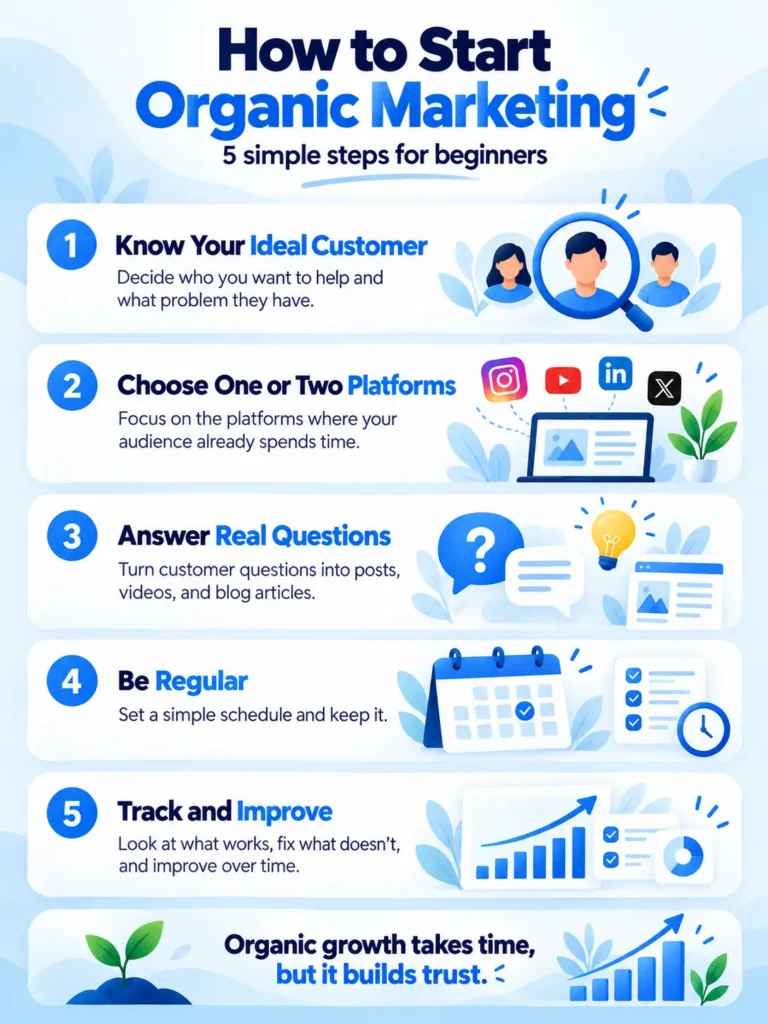
Step 1: Know Your Ideal Customer
Start by identifying your target audience, understanding their needs, and finding out what problems they face. This helps you create content that attracts the right customers.
Step 2: Choose One or Two Platforms
Focus on platforms where your potential customers are most active, such as Google, Instagram, or YouTube. Choosing the right platforms helps you reach your audience more effectively.
Step 3: Answer Real Questions
Identify common questions your customers ask and turn them into helpful blog posts, videos, or social media content. Providing valuable answers helps build trust and attract organic traffic.
Step 4: Be Regular
Create a realistic content schedule and publish consistently. Regular activity keeps your audience engaged and gradually builds your online visibility.
Step 5: Track and Improve
Monitor your website traffic, clicks, engagement, and enquiries. Understand which content performs well, improve what does not work, and adjust your strategy to achieve better long-term results.
Can You Learn Organic Marketing by Yourself?
Yes, you can. Many people do, and I started my career by self-learning too. But self-study has real problems. You get no mentorship, you fail and learn the hard way, and it takes a lot of time.
Strategy comes from doing multiple projects. A beginner who faces a problem often gets stuck. A person who has completed many projects knows what to try next, what to change and what to keep.
Learn Organic Marketing With Guidance at Edure
If you want to build a real career in digital marketing, you need skills, practice and a portfolio. A certificate alone is not enough.
At Edure, you learn through individual, project-based training. The course focuses on helping you understand how businesses attract customers, generate quality leads, and convert potential customers into enquiries through organic and paid marketing strategies.
AI-integrated digital marketing course in Kerala: Learn SEO, social media marketing, paid advertising, lead generation strategies, and the AI tools that modern marketers use.
Learn how to generate leads for businesses: Understand how to identify potential customers, reach the right audience, and generate enquiries through Google, websites, social media, and advertising campaigns.
Industry-specific lead generation strategies: Explore how to generate leads for real estate, education, healthcare, local businesses, and other industries using SEO, Google Ads, Meta Ads, landing pages, and content marketing.
Organic and paid lead generation: Learn how to attract customers without paying for ads through SEO and content marketing, while also understanding how paid campaigns can generate leads faster.
Multiple projects across modules: Each student works on their own projects, learning how to plan campaigns, attract potential customers, and measure marketing performance independently.
No traditional exams: We focus on industry standards and practical skills that help you perform in a real company.
Your projects become your portfolio: Build a portfolio through practical projects and receive your course completion certificate after successfully completing the required project.
Experienced trainers: Learn directly from professionals who work in the digital marketing industry.
Classes in Kochi, Trivandrum and online: Students from India, Europe, and the GCC can join our online classes.
Whether you want to learn how to get leads for business, generate real estate leads, attract customers through Google, or build an organic marketing strategy, Edure helps you develop the practical knowledge needed to understand and execute these marketing activities.
Anyone can learn digital marketing. You do not need a mandatory qualification to start learning, although educational requirements for company jobs may vary.
Frequently Asked Questions About Organic Marketing
What is organic marketing in simple words?
It means getting visibility, leads and sales without paying for ads. You earn attention through useful content, SEO and social media.
Is organic marketing really free?
You do not pay platforms for ads. But it needs your time and effort, and sometimes tools or a team.
How long does organic marketing take to work?
It depends on your business, your competition and how regular you are. It usually takes longer than paid ads, so patience is needed.
Is organic marketing better than paid marketing?
Not always. Paid marketing gives quick results. Organic marketing builds long-term trust. Many businesses use both.
Is SEO the same as organic marketing?
No. SEO is one part of organic marketing. Social media, YouTube, blogs and email are other parts.
Can a small business use organic marketing?
Yes. A small business can start with a simple website, a Google Business Profile and regular social media posts.
Where can I learn organic marketing in Kerala?
You can learn it through self-study or a structured course. Edure offers an AI-integrated, project-based digital marketing course in Kochi, Trivandrum and online.
